

Artaud Again
New Books Focus on the Magic

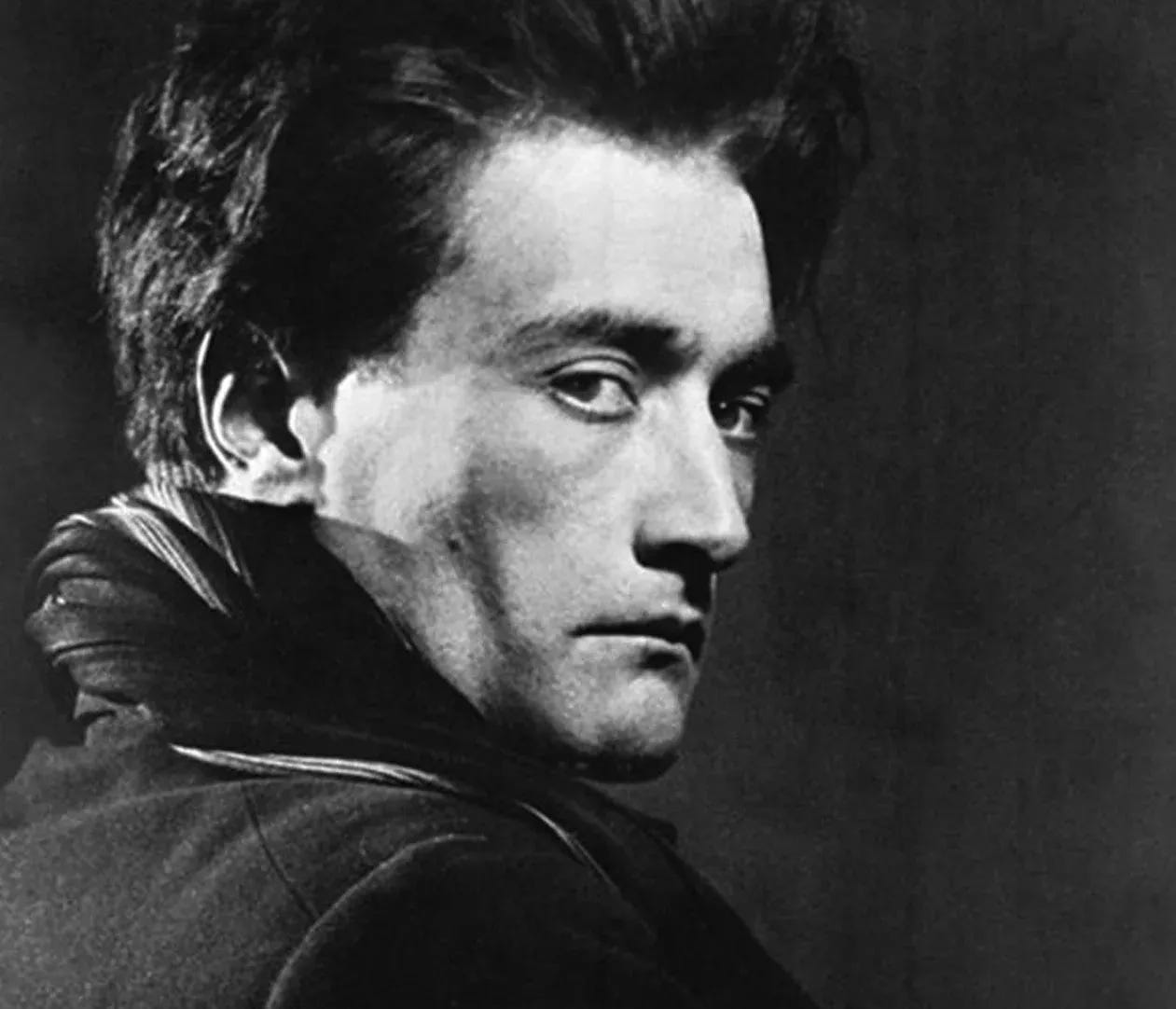
London-based publisher Infinity Land Press recently sent me their lovely books on Antonin Artaud, and they’re definitely worth mentioning here. Artaud seems to be a constant buzzer in esoteric circles – there’s even a piece about him in The Fenris Wolf 10 – and renowned publishers like Scarlet Imprint have added to the mystery/enigma by providing studies of this versatile and often over-heated, creative mind (eg. Jane Goodall’s Artaud and the Gnostic Drama). The zone in-between surrealism and magic is ever popular and the kinship is obvious. Breton’s important Magic Art, published on Fulgur, is well worth checking out in this regard as well.
The three volumes from Infinity Land are The New Revelations of Being & Other Mystical Writings (2023), Peter Valente’s Obliteration of the World – A Guide to the Occult Belief System of Antonin Artaud (2023), and The True Story of Artaud-Mômo – Face to Face: the Colombier Lecture 1947 (2025). Together they weave a composite of a highly troubled yet ever creative soul who often contextualized insights and structures via esoteric symbols and systems.
The trajectory of Antonin Artaud’s existence basically reads like a manuscript penned by a fevered scribe in the margins of rationality, where the boundaries between theatrical performance and mystical revelation dissolve into something far more unsettling than mere artistic innovation. His life, spanning from 1896 to 1948, unfolds as a series of encounters with the ineffable that would reshape not only his understanding of theater but his entire cosmology of human experience.
Artaud’s early years in Marseilles provided little indication of the revolutionary fervor that would later consume him. Yet even in his youth, one detects the tremors of a mind predisposed to perceive reality as fundamentally theatrical – a stage upon which invisible forces enacted dramas beyond the comprehension of ordinary consciousness. His initial forays into Surrealism brought him into contact with André Breton’s circle, where the systematic exploration of dreams and automatic writing served as his first formal introduction to techniques that would later inform his esoteric investigations.
The pivotal moment in Artaud’s intellectual development occurred during his exposure to Balinese theater at the Colonial Exhibition of 1931. Here was a form of performance that operated according to principles entirely alien to Western dramatic convention – a theater that functioned as ritual, where gesture and sound served not merely to represent but to invoke actual spiritual forces. The Balinese performers, in Artaud’s estimation, had retained access to primordial energies that European culture had systematically obliterated through centuries of rationalization and psychological introspection.
This revelation crystallized into what he would term the “Theater of Cruelty,” though the word “cruelty” carried none of its conventional sadistic implications. Rather, it denoted a kind of metaphysical necessity – the cruel precision with which authentic theatrical experience must strip away the accumulated detritus of civilized consciousness to reveal the raw, archetypal forces that govern human existence. The theater, properly conceived, became a laboratory for the investigation of what he called “the true anatomy of man,” a dissection that proceeded not through rational analysis but through direct, visceral confrontation with cosmic energies.
Artaud’s fascination with alchemy provided the theoretical framework for this theatrical metamorphosis. He perceived in alchemical symbolism not merely historical curiosity but a functional system for understanding the transformation of base theatrical material into transcendent experience. The stage became his retort, the actors his prima materia, and the audience the final product of a process designed to transmute ordinary consciousness into something approaching divine revelation. His manifesto “The Theater and Its Double” articulates this vision with the fervor of a hermetic text, proposing that theatrical performance could serve as a form of applied metaphysics.
The influence of Tarot imagery on Artaud’s theatrical conception reveals another dimension of his esoteric preoccupations. He understood the cards not as fortune-telling devices but as repositories of archetypal wisdom that could inform dramatic structure. Each performance became a kind of three-dimensional Tarot reading, with actors embodying the fundamental forces represented by the major arcana. The theater, thus conceived, functioned as a divination system capable of revealing hidden truths about the human condition.
His encounters with indigenous Mexican culture during his journey to the Sierra Tarahumara in 1936 represented perhaps the most profound synthesis of his theatrical and magical investigations. Among the Tarahumara, he discovered what he believed to be the survival of authentic shamanic practices – techniques for inducing altered states of consciousness that European civilization had long abandoned. His participation in peyote rituals confirmed his suspicion that consciousness itself was far more plastic and multidimensional than Western psychology acknowledged.
These experiences fundamentally altered Artaud’s understanding of theatrical performance. No longer content to create mere entertainment or even artistic provocation, he began to conceive of theater as a form of collective shamanism capable of healing what he perceived as a profound spiritual sickness afflicting modern civilization. His late theatrical projects, including “To Have Done with the Judgment of God,” represent attempts to create performances that would function as actual magical operations – rituals designed to invoke tangible transformations in both performers and audience.
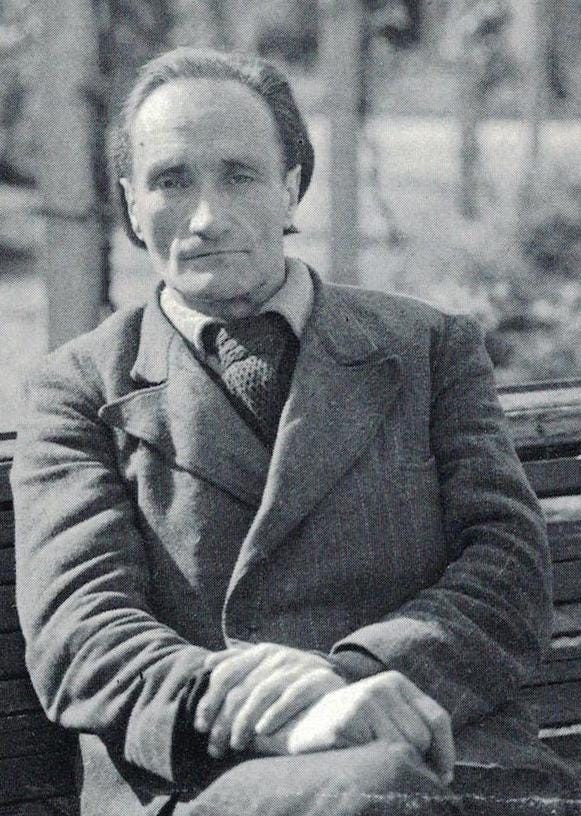
The tragedy of Artaud’s final years lies partly in the impossibility of translating these esoteric insights into forms comprehensible to his contemporaries. His increasing mental instability, culminating in his confinement to various asylums, can be read not merely as personal breakdown but as the inevitable consequence of attempting to apply genuinely magical thinking within the context of twentieth-century European culture. The electroshock treatments he endured represent a particularly cruel irony – attempts to restore “normal” consciousness to a mind that had glimpsed possibilities for human awareness far beyond conventional parameters.
Yet even during his darkest periods, Artaud continued to develop his theoretical framework, producing drawings and writings that blur the distinction between artistic creation and magical practice. His later works suggest that he had begun to conceive of language itself as a form of incantation, where the arrangement of words on a page could function as a kind of textual alchemy capable of transmuting the reader’s consciousness.
The posthumous influence of Artaud’s esoteric investigations extends far beyond theatrical circles, inspiring generations of artists, philosophers, and spiritual seekers who recognize in his work a genuine attempt to reunite art with its primordial magical functions. His vision of theater as a technology for consciousness transformation continues to resonate with contemporary practitioners exploring the intersection of performance and spiritual practice.
Ultimately, Artaud’s significance lies not in any single innovation but in his insistence that authentic artistic creation must inevitably lead beyond the merely aesthetic into realms of genuine metaphysical investigation. The challenge is to learn this metaphysical and indeed gnostic language, and if it doesn’t fit, to find another. Artaud’s life serves as both inspiration and cautionary tale – a reminder that the pursuit of transcendent truth through artistic means remains as dangerous as it is necessary for those brave enough to venture beyond the safe boundaries of conventional consciousness (and art making).
Please check out Infinity Land Press and their amazing books here.
This is a free post. If you like the content please consider becoming a paid subscriber. Thank you.


Great piece!