

Let’s Play Ball
The Occult Gospel According to Wah-Wah

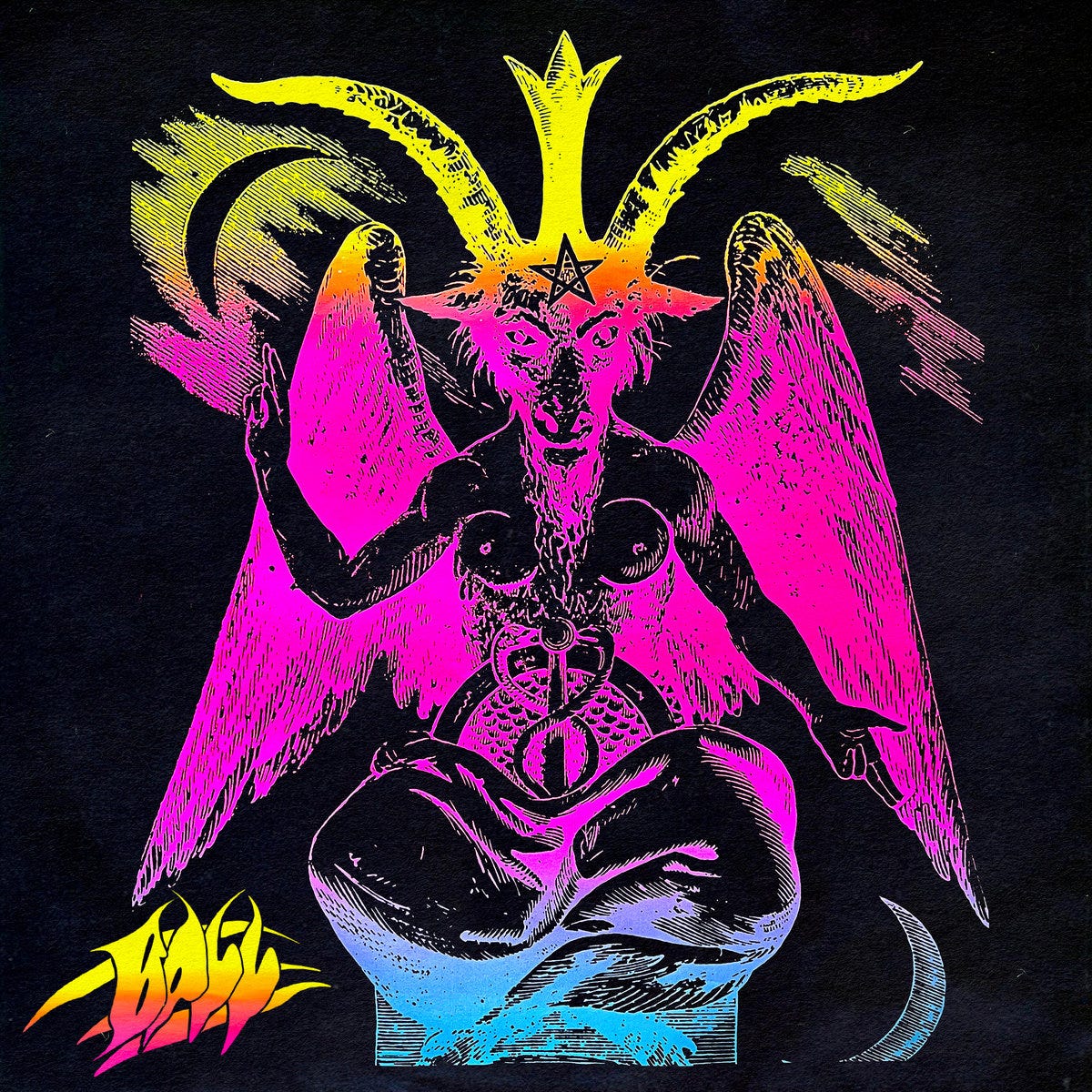
There are bands you “discover,” and then there are bands that arrive like contraband: greasy, unmarked, smelling faintly of amplifier smoke, graveyard dirt, and somebody else’s bad decisions. Ball, the Swedish rock band with the name so blunt it almost dares you not to take them seriously, belong absolutely to the second category. They don’t so much make records as they exhume forbidden party music from a crypt where Blue Cheer, Black Sabbath, Roky Erickson, The Stooges, and some half-remembered biker-gang jukebox all got sealed in together and left to ferment – for decades.
Why are Ball so great? Because they understand something that polite rock music forgot somewhere around the advent of “tasteful production”: rock and roll is supposed to feel a little stupid, a little dangerous, a little holy, and a little like it might stain the carpet. Ball are not here to demonstrate their cleverness. They are here to summon the riff, feed it raw meat, let it run around the room knocking over lamps, and blowing minds while at it.
The first thing to know about Ball is that the name is perfect. Not elegant, not poetic, not search-engine-friendly, not “evocative” in the way publicists use that word when they mean “vaguely marketable.” Just Ball. One syllable. Thud! Bam! Pow! It lands with the dumb cosmic authority of a bass drum in a basement. It could be a joke, or a threat, or a full fledged Satanic philosophy. That’s the point. Ball understand that rock doesn’t always need mythology embroidered on top; sometimes the mythology is already there in the sound of a guitar being overdriven until it stops resembling an instrument and starts resembling weather, mixed with hormonal and metabolically enhanced attitudes.
Their 2017 self-titled debut, Ball, is the sound of a band arriving fully in possession of its bad manners. It’s raw without being amateurish, heavy without being sludge for sludge’s sake, retro without lapsing into wax-museum cosplay. That last part matters. Plenty of bands go rummaging through the late 1960s and early 1970s like they’re shopping for bell-bottoms at a thrift store. Ball don’t sound like they’re “influenced by” that era so much as they sound like they found a tunnel underneath it and crawled out covered from stoned head to broken toe in filthy fuzz.
The debut is full of that hot, blown-out, occult-garage electricity: songs that lurch, stomp, and leer rather than “progress.” The riffs are huge but not polished into arena-rock anonymity. The vocals don’t posture above the music; they seem to rise out of the same smoky pit as the guitars. There’s something refreshingly anti-hygienic about it all. The record doesn’t try to impress you with virtuoso fireworks or conceptual ambition. It simply kicks open the cellar door and says: here is a groove, here is a pulse, here is the primitive neurological fact of rock music before it got re-upholstered and taken to the arena.
What Ball took from early heavy music wasn’t merely volume or distortion, but life. This is where they separate themselves from the countless doom-adjacent bands who think being heavy means moving like furniture. Ball have hips. Ball have sweat. Ball have that old rhythm-and-blues ghost still rattling around inside the amplifier. Even at their murkiest, the songs retain a sense of motion, a lascivious boogie buried under layers of wah-wah fuzz. This is occult rock you can spill beer to, and feel proudly empowered by it at the same time.
Then came Like You Are… I Once Was… Like I Am – You Will Never Be (2020) which, title-wise, sounds like a curse scratched into a church pew by a condemned monk who has just discovered what a wah-wah pedal can make the nuns feel and do. Hail Satan! If the debut announced Ball as disciples of the holy racket, this follow-up widened the ritual circle. The production feels bigger, the songs more self-assured, the whole thing more luridly theatrical. It’s not cleaner exactly — thank Satan — but the shadows are deeper, the colors more saturated (and we all feel with what: a three letter doorway to the vaults of horror and delight).
This is the album where Ball’s sense of drama becomes unmistakable. They are not just a riff band, although the riffs are there and they are filthy and medicinal. They are atmosphere merchants. Their music has rooms in it: red-lit rooms, with fractured mirrors, damp basements, ancient chambers where the wallpaper is peeling and someone in the corner is smiling too weirdly. You don’t simply listen to Ball; you enter a little B-movie cathedral where every candle smells like gasoline and every girl is actually a witch hell-bent (literally) on corrupting you.
And yet — crucially — the band never becomes ponderous. That is the fatal trap of so much occult rock: the idea that because you’re dealing in devils, ceremonies, death, sex, and electric dread, you must therefore become very solemn and very slow and very pleased with your own incense budget. Ball mostly avoid this by remembering that evil, in rock and roll, should be fun. Not safe, not sanitized, not ironic — fun in the ancient carnival sense, where fun means masks and drums and somebody maybe getting chased into the woods (most likely you).
Their later material — including the ferocious albums Midnight Heat (2023) and Satanic Ecstasy (2025) — pushes this logic further. By this point Ball sound less like a band paying homage to primordial heavy rock and more like a band building its own private temple out of the pieces. The garage elements are still there, the proto-metal stomp is still there, the psychedelic smear is still there, but it all feels increasingly internalized. They aren’t waving influence-flags. They’re simply playing Ball. Are you listening closely?
And what is the Ball language? It is fuzz as theology. It is repetition as hypnosis. It is the riff not as ornament but as commandment to worship the dark forces. It is the bass and drums not as accompaniment but as some tremendous beast dragging the song forward by chains. It is vocals treated less like “frontman expression” and more like a transmission from behind a locked door – in an insane asylum. It is Sweden imagining the American and British rock past not as museum history but as a living ooze, something still capable of mutating, infecting, seducing.
Part of Ball’s greatness lies in their refusal to be respectable. Respectability is death to this music. The minute rock starts wanting to be admired by grant committees, lifestyle magazines, or people who describe guitar tones as “awesome,” it begins coughing up dust and eventually slimy blood. Ball sound like they would rather be banned from the civic arts center than applauded politely inside it. Their records carry that whiff of the illicit — not because they are actually shocking in some tabloid sense, but because they restore to rock the feeling that you are hearing something slightly disreputable. (”For the love of Satan, keep fucking!”)
That may seem like a small thing, but it isn’t. In an age when rebellion is often prepackaged as branding, Ball’s commitment to murk, heat, repetition, and sleaze feels almost perversely sincere. They don’t wink at you constantly. They don’t reassure you that they are smarter than the material. They do the harder, rarer thing: they believe in the material. They believe in the riff. They believe in the organ-grinder churn of heavy garage psych. They believe that a song can be three chords and still open a trapdoor in the floor to unimaginable and bloody horrors.
There’s also a Scandinavian weirdness to Ball that matters. Sweden has long had an uncanny relationship with rock revivalism — we seem able to produce bands that don’t merely imitate past forms but lacquer them in cold northern moonlight until they gleam strangely. Ball are part of that tradition, but they are rougher, nastier, less decorative than many of their so-called peers (Ghost would be a prime example). They do not sound like a palatable export. The blonde-haired Kingdom of Ersatz shits out a million sanitized symbols of the supposedly dangerous but dreads these rare moments when the Scandinavian unconscious actually compresses prismatic gemstones into phenomena like Ball. Why? Because Ball speak the truth, the whole truth, and nothing but the truth, so help me Satan from the point of view of the teenage Satanist rebel rouser.
The greatness of Ball, finally, is not that they reinvent rock music. They don’t. Reinvention is overrated anyway, especially in a form built on theft, repetition, mutation, and sacred stupidity. Ball’s greatness is that they reanimate rock music. They remind you that the oldest moves can still work if played with enough conviction, filth, and psychic voltage. A fuzz riff, a pounding beat, a voice howling from the smoke — these things are not exhausted. They only seem exhausted when handled by cowards and posers.
Ball are great because they make rock feel physical again. Not theoretical. Not curatorial. Not like a mood board. Physical. Their albums hit the body before the brain has time to issue its little academic permissions. You feel the drums in the ribs, the bass in the floorboards, the guitar in the fillings. The songs don’t ask whether you “get” them. They simply start happening, and then the room changes shape. Beware of the angles!
So praise Ball, then: blunt, heavy, lurid, unclean, and alive. Praise the stupid-perfect name. Praise the riffs that sound dredged from Hell. Praise the sense of ceremony without the suffocating self-importance. Praise the way they make the past feel less like nostalgia than possession. Praise the fact that in a world drowning in tasteful little playlists and bloodless sonic wallpaper, Ball still sound like a band trying to raise something from the dead — and succeeding.
Not every band needs to save rock and roll. Most who try end up embarrassing themselves. Ball do something better. They remind you why it needed saving in the first place.

