

Online Groves, pt 1
On contemporary witches & their screen-craft

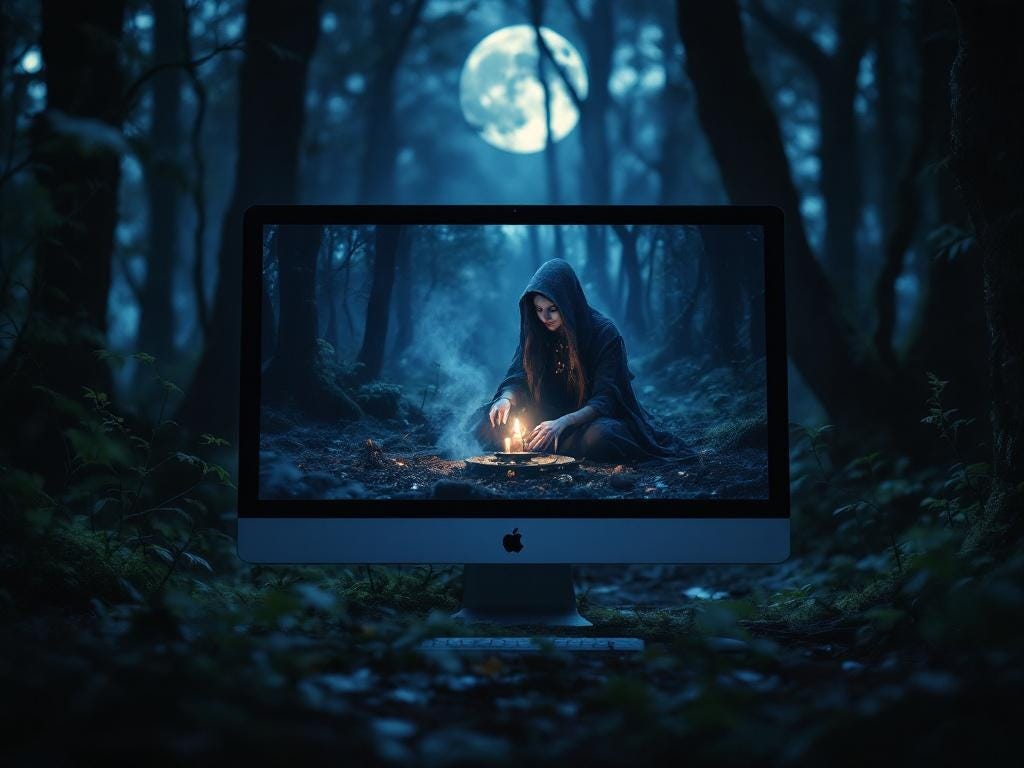
In the old stories, a witch needed three things: a threshold place at the edge of the village, a secret knowledge of herbs and names, and a clientele of the more or less desperate. Nowadays the village is a boundless network, the herbs are filters and engagement tricks, and the desperate arrive as anonymous avatars, scrolling alone on buses and in beds. Yet the figure of the witch persists, reborn as a glittering presence on small screens – a hybrid of influencer, oracle, pornographic fantasy, and reluctant priestess of the digital night.
What happens when the ancient archetype of the witch – seductive and terrifying, insightful and scandalous – plugs into a machine that feeds on attention more than anything else? And what does it mean that this convergence unfolds under the sign of femininity – sometimes biological, sometimes stylized, always performed and monetized?
If our context is dark occultism, we are obviously not dealing with innocent metaphors. The algorithmic systems that shape our habits are not experienced as neutral. From within the trance of scrolling, they behave like capricious deities: rewarding some, punishing others, demanding sacrifices of time, emotion, and exposure, while their deepest workings remain hidden. Around them, a visible caste has arisen: those who can summon crowds with a gesture, who seem mysteriously “favored” by the feed. Many adopt feminine or feminized personae that blend glamour, witchcraft, self-help, and erotics into a continuous spectacle.
